Ellie Searl Stories

9/15/2010

ACROSS THE GENERATIONS

CORRUPTION - Corruption is like a ball of snow, once it's set a rolling it must increase. ~ Charles Caleb Colton


FAIRLAWN CEMETERY

Located in the Town of Prattsville, NY, on the left had side of the road on Rte. 23, about one mile past the bridge heading towards Grand Gorge. This cemetery is active and is in excellent condition.

Section 4, Plot 84

Louise A.K. Volckmann, b. 1884, d. 1957
Frederick P. Volckmann, b. 1883, d. 1968
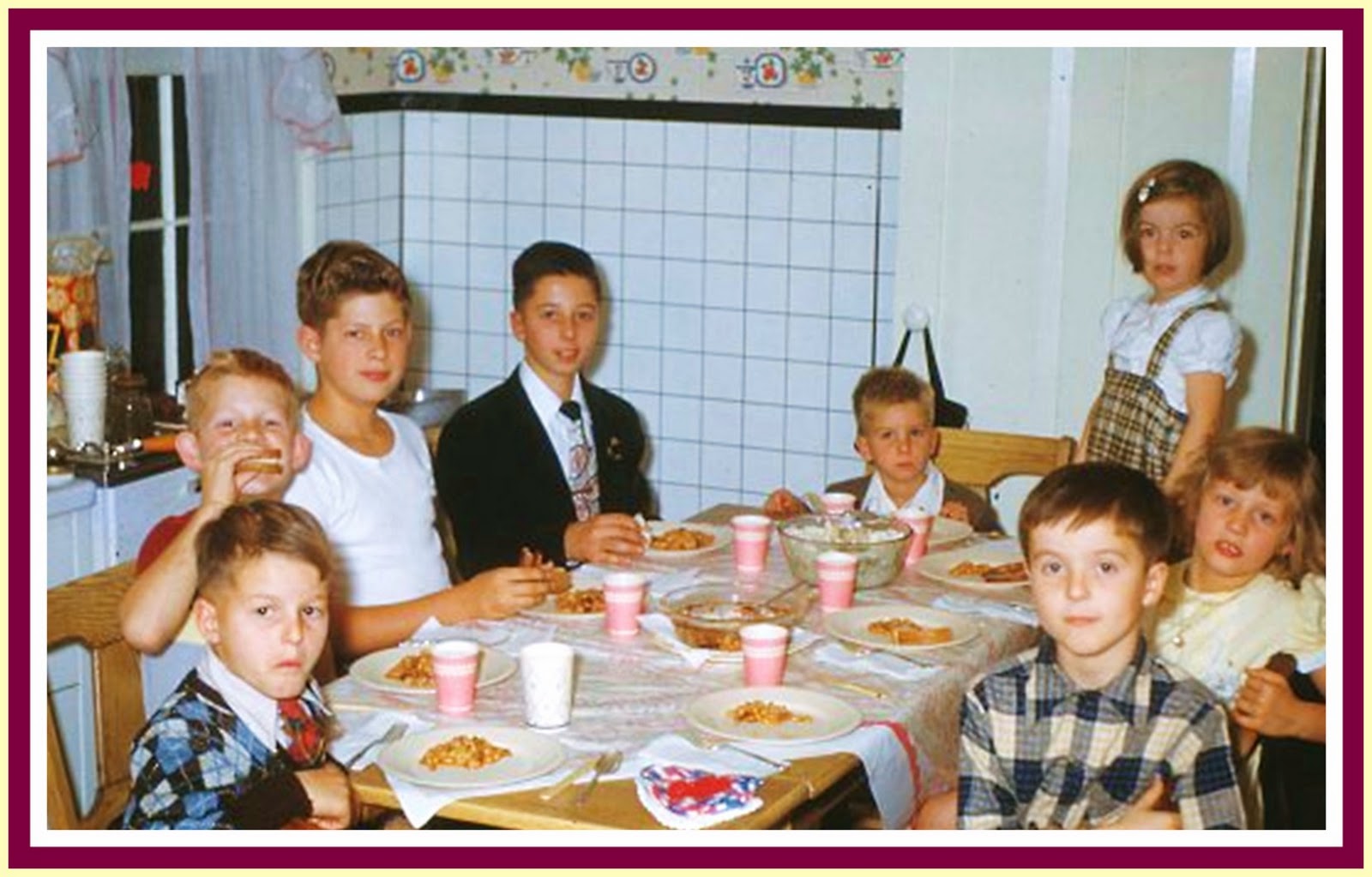

I don’t remember much about my grandmother, other than she was very generous, sweet, and loving, and she adored my father, her only child. Her home smelled like violets and her lemon sponge cakes seemed to rise a foot off the plate. She married my grandfather in 1907 when she was 23 years old, and my dad, born in 1912, became a new love in her life. Her husband, my grandfather, spent the remainder of their marriage resenting that he would have to share his wife's attention with his son.

Grandma died of a massive stroke in the summer of 1957, a few days after her fiftieth wedding anniversary. A Volckmann family reunion combined with a golden anniversary party had been scheduled, so family members, already planning to attend, gathered at my grandfather’s house in Prattsville, NY, and rather than salute fifty years of marriage, they mourned the death of my grandmother.

Grandpa cried and handed out the monogrammed gold pens - party favors designed for the anniversary – now sad mementos of death. Grandma was laid out in the living room beside the grand piano, which my grandma promised to Dick after she and Grandpa died. The grandfather clock, promised to me, ticked in the silence. Friends and relatives sat around the edges of the room on silk-covered Victorian chairs, whispering about Fred and whether or not he would be able to carry on without Louise. My brothers, cousins, and I had to eat in the kitchen so we wouldn’t bother anybody. Grandpa sat in the corner of the dining room, his elbows on the table heavy with funeral food, and sobbed - his wife’s death rendering him inconsolable. Grandpa had lost the only person in the world who would accept him for what he was.

My grandfather was not a nice man. Whenever my brothers and I visited his house or sat with him at dinner or rode in his car, he seemed to enjoy being rude. He was never the kind of grandparent who delighted in being with his grandchildren. Instead, he’d grumble about us under his breath or just go about his business as though we weren’t there – so when he died eleven years after Grandma, not one of us shed a tear.

Apparently, we weren’t the only ones who thought poorly of Fredrick P. Volckmann because only five townspeople came to Grandpa’s funeral in 1968. And with the family members who felt obligated to go, a total of twelve showed up. It wasn’t that my grandfather lived so isolated in the Catskills that he couldn’t find any friends. My grandfather was such a curmudgeon that no one in or around Prattsville thought much of him. His many years of grumbling about this or that or the other thing gave him a reputation as the town grouch. So when he died, few noticed. And of those who noticed, few cared.

My husband Ed sat with me and our baby daughter Katie near the front of the funeral parlor and watched my dad scowl down at his dead father.

The undertaker sidled alongside the casket. “Does he look ok?” he asked. “I tried to give him some color. He was kind of pale.”

“He looks pink – and puffy,” Dad grumbled. “And where the hell did you get that awful suit?” Dad pointed to the ill-fitting beige polyester suit with brown piping. It bunched under Grandpa’s armpits and pulled across his belly at the button. “That’s not his.”

“Francis brought it over.”

“Who’s Francis?” Dad snapped. “You mean Florence?”

“Oh, I’m so sorry, Mr. Volckmann.” The undertaker blotted his forehead with a yellow stained handkerchief. “Florence, yes. She said that suit was the one your father wore for special occasions.”

“Norma!” Dad called to my mother. “Did you see what they put him in?”

Mom sat in the back of the room speaking to Florence, Grandpa’s second cousin and family busy body, whom nobody really liked, but everybody tolerated because for the eleven years after Grandma died, Florence lived with Grandpa - keeping him company, being his traveling companion, doing the shopping and the laundry and the cooking and the housekeeping – something no one else in our family would have volunteered to do. Of course, once the will was read, it became very clear why Florence put up with Grandpa until he died.

Mom looked over at Dad. “What?” And, as was her style, shouted, “I’ll be there in a minute,” then turned back into conversation with Florence, not giving any more attention to my dad, the only one at the viewing, who, up to that point, had actually viewed the body of his dead father.

Ed, Katie, and I joined Dad at the casket. “I’m sorry about Grandpa,” I said, knowing I wasn’t really sorry but figured Dad needed me to be. Grandpa never seemed happy – growling to anyone who’d listen, complaining about us, his only grandchildren, that we weren’t grateful and didn’t acknowledge him enough. “I hope he’s happier in heaven.”

Dad nodded and wiped a tear from the corner of his eye. “He looks horrible.”

Later that afternoon, the attorney came to my grandfather’s home for the reading of the will.

“Mr. Volckmann, your father left you the Cadillac, his diamond pinky ring, and the silver tea service,” the attorney said. He didn’t look up. No one looked up. “He left $3000 to each of the grandchildren, Dick, Dave, and Eloise. If they haven’t finished college, the money goes to their education.” The lawyer cleared his throat. “To Florence, he left the property, the barn, the house, and all the furnishings.”

No mention of the piano or the grandfather’s clock. I thought about the many visits to my grandparents’ house when I was a kid. I didn’t like my grandfather much, but I had fond memories of my grandma’s sponge cake, the vanilla pudding smell of the kitchen, the Little Lulu comic books in the bureau drawer, the huge bathroom upstairs where I played dolls on the green carpet, the whoosh of the waterfall in the river behind the house, the pine log swing in the back yard, the ferns that grew between the green slates of the side patio, and the red-handled pump under the arbor that drew cold water. Regardless of my feeling for my grandfather, I loved the house that rested in the center of the Catskill Mountains. And now it no longer belonged to our family. Now it belonged to Florence.

My heart broke for Dad at the reading of his father’s will. There Dad sat – the rightful heir to this lovely land in the Catskills - listening as his growing-up home was assigned to some distant cousin, a woman who had spent the past eleven years with a bitter old man so she could get her hooks into his valuable property. Dad was forced to relinquish his inheritance to a conniving woman we all thought was doing everyone a favor. How Florence got my grandfather to name her as his main beneficiary was unclear. That my grandfather didn’t leave the house, furnishings, and land to his only son was unfathomable – unforgivable. And the overwhelming hurt that must have caused my dad was incomprehensible.

It was at the reading of the will that it hit me. My dad was just like Grandpa. Disgruntled and forlorn. For years, I blamed my father for being a miserable, overbearing person. He seemed angry all the time – wanting his own way, finding fault with others, feeling left out, demanding attention, and chastising those who didn’t meet his standards, which was frequent. But after being confronted with my grandfather’s wretched disposition and his last will and testament, I realized Dad must have lived in a household of fear and emotional corrosion.

In spite of Grandma’s devotion and love, living under the shadow of Grandpa’s nastiness and constant disapproval, Dad never had a chance to develop into a confident, happy man. Grandpa didn’t offer my Dad the positive bonding vital to father-son relationships. Throughout his growing up years, my dad must have been under so much pressure to please his father, he didn’t notice his confidence was in a continuous process of decay.

Instead, Dad imploded, becoming uncomfortable in his own skin. His self-esteem diminished each time he didn’t meet Grandpa’s standards. With Grandpa’s constant disapproval, Dad must have seen himself as a failure. And with his energy being used up to please his father, his sense of self couldn’t develop.

My grandmother probably tried to mollify the ongoing humiliation, but with men like my grandfather, she didn’t have the wherewithal to combat the stifling oppressiveness. With my grandfather at the controls, Dad never learned how to love himself or the people around him. Instead, he learned to feel inferior, becoming full of insecurities, which he eventually protected behind a wall of fury and resentment – a fury and resentment that seeped into the life Dad started with my mother and into the home that raised my brothers and me.

“Of course, I will give it all back to you in my own will,” Florence said, in what was most likely an aberrant, fleeting state of guilt. But that never happened. She kept it all, willed it to her son, and our family never went to Prattsville again.

Family interactions are not simple incidents between two or more people in a household at any given time. Family interactions give birth to whole personalities, creating behaviors, emotions, and attitudes. Family interactions significantly impact the mind of a child, co-opting opinion, rearranging viewpoint, solidifying disposition, influencing judgment, ultimately defining character and sense of self. Once the child becomes an adult, the self-images gleaned from what seemed like simple family interactions are carried into, and beyond, the next generation.

Our job as parents or guardians is to recognize those destructive behaviors and interactions that erode the spirit and leap to eradicate anything that even hints of the insidious corruption of the soul.

EVS 08/10

“In a house which becomes a home, one hands down and another takes up the heritage of mind and heart, laughter and tears, musings and deeds. Love, like a carefully loaded ship, crosses the gulf between the generations. . . . Let us build memories in our children, lest they drag out joyless lives, lest they allow treasures to be lost because they have not been given the keys. . . . It is needful to transmit the passwords from generation to generation.” from Generation to Generation by Antoine de Saint-Exupery.

8/15/2010

IN A BORROWED WORLD

Borrowing  -  I not only use all the brains that I have, but all that I can borrow. ~ Woodrow T. Wilson

A conflict of values can alter a state of well-being at any time. Such conflicts might cause discomfort, complications, or upheavals. In our case, a conflict of values caused us to transform our lives, and in June of 1970, my husband Ed, our two-year-old daughter Katie, and I moved to Canada. It was like borrowing a country.

The US Selective Service, still filling slots for the Vietnam War, had denied Ed’s request for Conscientious Objector status. What person raised Catholic, they wondered, would choose to become a Unitarian minister? Pure expediency, they determined - then they drafted him. Ed and I refused to support the war, so we packed what we could in our car and left the States for Canada. For the next three months, we tent-camped through the Eastern Townships of Quebec and New Brunswick, across the Bay of Fundy into Nova Scotia, and back again to Ottawa, Ontario - looking for a place to live.

In mid-August, we met Norm and Diane Crawley at the Unitarian Church of Ottawa. They ran a safe house for American draft dodgers, and because we looked like an honest, upstanding family, they asked us to housesit while they went on a month’s vacation. During our stay in the Crawley’s home, Katie celebrated her second birthday, and a volunteer from the Aid to Immigration and Draft guided us through a maze of escapade and intrigue so we could become Landed Immigrants of Canada (see “Canadian Landing” posted 11/09).

By early October, we were ready to live on our own again. We found a lovely apartment in the suburbs of Ottawa that cost $300 a month – rather expensive for us at the time. But we had a little money from an inheritance set aside for emergencies. Ed and I decided that, after three months of camping, one month of living with seven strangers in someone else’s home, and a two-year-old daughter way past ready for potty training, living in our own place had become an emergency.

Ed continued to look for a good theological school and a full-time job, and I found a part-time job at as an aide in a private kindergarten owned by an aging woman who used Sesame Street as her main teaching tool, except when the show repeated a letter because, “The kids had that letter last week.” Educational reinforcement and child development held less importance than pocketing the cash from parents too uninvolved to notice.

I left the kindergarten job in early December when I found a sales position in downtown Ottawa at a gem and jewelry store, owned by Tom and Nancy, a couple from northern Ontario who seemed generous and enthusiastic to hire me. I started work just as the Christmas season lit up the city with greenery, red berries, twinkle lights, and lots of snow.

Tom and Nancy showed me around the store, explaining the basics of all the precious and semi-precious gems on display. There were bracelets, necklaces, earrings, and individual stones ready to be set into original designs. Aquamarine, opal, amber, tanzanite, onyx, peridot, rose quartz, and smoky topaz. I learned where the gems were mined, which ones stood up to everyday wear, and which ones didn’t. Carol, the other salesperson, and I became friendly and often chatted with each other on our time off. She taught me how to use the electric cash registers at the front of the store and the manual one in the back near the office, and she showed me how to arrange the agate geode bookends so they’d display their best sides.

The T-shaped store had display cases continuing through the shop to the left and an office to the right where we kept our coats and purses, ate lunch, and gossiped about the customers.

A perk of the job, a requirement actually, was to wear pieces of jewelry as a marketing technique. Each morning Carol and I chose which of the beauties to wear. We decked ourselves in turquoise bracelets, amethyst necklaces, and jade earrings. It worked. Customers noticed. We sold items right off our bodies.

A couple of weeks after I began work, Nancy asked me why Ed and I moved to Canada. I told her the truth - that we didn’t support the war in Vietnam, so when the draft board refused Ed’s Conscientious Objector request and drafted him, we left the country. When I finished the story, Nancy said, “Oh,” and went off to rearrange a set of bookends. Her response troubled me. Most Canadians Ed and I had met were sympathetic to our cause.

It was on the day I told my story to Nancy that I wore a pair of 14 karat gold and jade teardrop earrings. Carol and I went out to lunch a couple of blocks down the street. A little short on cash, I borrowed a dollar from Carol. I felt somewhat irresponsible for not having enough money to cover my meal, but Carol smiled and said she didn’t mind.

A soft snow began to fall as we walked back to the store. An hour later, I realized one of the earrings was gone. I felt sick. Had I lost it? The guilt of borrowing a dollar from Carol diminished in light of losing an expensive earring. How would I explain this to Tom and Nancy? I scoured the floor, searched the office, and checked the folds and pockets of my winter coat. I made some excuse to leave the store and walked toward the restaurant, head down, searching for the proverbial needle in a haystack. The sloppy sidewalk made it practically impossible to see anything but slush mixed with dirt as shoppers trampled through the snow. But right there, at the edge of a ventilation grate, I saw a pop of green and gold. The jade earring. In perfect condition. Ah - saved from telling Tom and Nancy that I had lost the earring in the first place.

About two hours after that, the electricity went out. The snowfall had turned into a severe storm and knocked out the power on our side of the street. A generator provided enough electricity to light up a portion of the front display areas and to run one of the automatic cash registers. Nancy asked me to monitor the back area and if necessary, use the manual cash register beside the office. Tom, Nancy, and Carol stayed in the front of the store and chatted. They glanced in my direction every now and then, but I couldn’t hear what they said. The storm kept away customers, so I didn’t have much to do other than hang around in the dark. I located a stool, a flashlight, and an old Life magazine from the office and sat there until closing, passing the time by reading under the dim light.

Before I left for work the next morning, I received a phone call from Nancy. “You don’t need to come in anymore,” she clipped.

“Not at all?” I asked. “What happened?”

“The weather is keeping people home . . . .” She cleared her throat. “We don’t have much traffic. Sales are down. We’ll put a check in the mail.”

I had only worked there two weeks. How could they have changed their minds in two weeks? Nancy’s hostile tone indicated something more had happened. She hung up before I could ask.

Ed, Katie, and I drove into the city so I could return the dollar to Carol. Ed and Katie window-shopped while I went to the store.

Nancy stood at the cash register sorting bills. A customer twirled the earring display. Harry Belafonte sang through the speakers, “for hate is strong, and mocks the song . . .”

“Hi, Nancy,” I said, thinking she’d be glad to see me. “Is Carol here? I came to return a dollar I borrowed yesterday.”

“No, she isn’t,” Nancy said. She dropped some dollar bills into the drawer. She looked up at me square in the eye. “And if she were, she wouldn’t want to see you.”

My stomach flipped. Huh? “What?”

Nancy looked back at her money. “Carol’s not here . . . you should leave.”

“What happened?” Never before had I felt so immediately confused and startled and unjustly attacked.

“You know what you did,” she said.

“I don’t know. What are you talking about?”

Nancy heaved a sigh, plopped her palms on the counter, and leaned forward. “Yesterday . . . when the electricity went off . . . you were the only one in the back . . . money was stolen from Carol’s purse. You were the only one back there,” she emphasized.

My mind went dizzy, then blank. I lost focus, the idea of stealing - anything - was so alien to me. Maybe in the next split second I looked guilty because I didn’t move – I just stared at the counter.

Finally, I spoke. “I didn’t do that,” I whispered. “I don’t even take money from my husband’s pants pockets when I hang up his clothes.” I sounded silly. Then I remembered the jade earrings. “I trampled through the snow yesterday looking for an earring you wanted me to wear. I thought I’d lost it. Do you think I’d go to that kind of trouble if I were a common thief?” My incredulity at the injustice turned my voice into a frenzied whine. “And why would I trek all the way back here to return a stupid dollar to Carol if I had just stolen money from her?” The more I talked the madder I got. “Never, in a million years, would steal from anyone!”

Nancy waved her arm in dismissal. “Well, whatever happened, we don’t want you here anymore.” She grabbed the dollar I still held in my hand. “I’ll see that Carol gets this.” She walked off to attend to the customer, who by that time had received quite an earful.

Harry Belafonte’s song followed me out the door. “And in despair I bowed my head . . ."

By the time I reached Ed and Katie across the street, I was choking back sobs, and by the time I finished venting the incident to Ed, he was half-way to the store.

Katie and I trailed into the shop behind Ed and watched as he yelled at Nancy for accusing me of stealing - and for firing me, which by that time had become an afterthought. “Ellie is about as honest as they come. And a more loyal person you’ll never meet.”

At once, my emotions stumbled over each other – pride for Ed, anger at the false accusation, pity for myself, dismay at losing my job.

“Funny, coming from you,” Nancy sneered. “You two left your country. What kind of loyalty is that?”

It didn’t take a genius to figure what had happened. Nancy, Tom, and probably Carol didn’t approve of our life choices, and no matter what we did or said, we’d never convince them that I hadn’t stolen money from Carol’s purse, much less merit working there.

It was through a conflict of values, followed by borrowing with good intentions and good will, that had led my family and me to this time and place. Guided by our moral codes, we had left the life, values, and resources of one country and borrowed those of another - temporary homes in Canadian campgrounds, comfort at the Crawley’s, and volunteers who helped us become Landed Immigrants.

But it was through telling the truth about those very life choices that condemned me. My tenacity to search for and find a jade teardrop earring, and my determination to return a borrowed dollar carried no weight. Prejudice, discrimination, and intolerance had defined me. They labeled me a thief. No recognition of unmerited indictment. No reluctance to shovel me into yesterday’s snow.

The frustration of defeat in the face of injustice overwhelmed me. I had no recourse. If I reported the situation to the Canadian version of the Better Business Bureau, Nancy and Tom could have recanted calling me a crook, and they could have said they had to let me go because they didn’t have enough customers to keep me on staff. What employee advocate would find a merchant culpable of business related injustice in the face of economic decline?

Up to that point, even with the selective service denying Ed CO status, my world had been a fair one. This foreign accusatory world held me hostage. I wanted to hang these people from the nearest store rafter, but I was powerless to combat them in any way that would offer justice.

Later that day and into the next, I composed a letter to Nancy and Tom about honor, fairness, and social conviction. I moralized. I gave examples of my good character. I threw in times I could have cheated and didn’t. What I thought I’d reap from this moral scolding is anyone’s guess.  I suppose I wanted them to understand that following my conscience, even if it meant leaving my country, didn’t equal petty thievery.

I never heard from them. Never had the satisfaction of a simple apology. I had to let it go.

Every now and then, I fuss about the incident and the stinging indignation that followed, but I refused to let it tear me down. In fact, it helped strenghten my depository of strength and resilience - a depository I draw from when I need to borrow a little fortitude.

EVS 08/10

7/15/2010

A SLICE OF SUMMER

COMING HOME - There is a magic in that little world, home; it is a mystic circle that surrounds comforts and virtues never known beyond its hallowed limits. ~ Robert Southey

My first significant A+ on a paper came in seventh grade from Mr. Feltman for a one-page, one-paragraph story about a terrible summer afternoon when I was five years old. It's been decades since I wrote that story, but here is what I remember:

It was lunchtime. Mom, at the kitchen counter, stirred lemonade into iced tea, my two older brothers stood beside her making peanut butter and jelly sandwiches, and I sat at the table, coloring, my crayons scattered across the enamel. A man walked onto the back porch and spoke through the screen door. I thought he asked, "Do you want a Collie?" I looked up from my coloring book and said, "We already have one. His name is Teddy." I scraped back my chair. "Want to see him?" Then the sad man said he had run over our dog with his car. Teddy was dead. We walked to the highway and looked at Teddy as he lay on the pavement, eyes closed, as if he were asleep. I patted his tummy and cried and tried to wake him up, but he didn't move. No more Teddy. No more Teddy chasing sticks and lapping water over the edge of his bowl. No more Teddy snuggling his nose under my arm as we sat on the porch steps. No more silky amber coat and firm presence. No more best friend. My heart ached. The story ended with how Teddy had given me an irreplaceable security and comfort, a special belonging to the world. That he had taught me the importance of unconditional love and shaped the buds of my spirit.

I wrote that story with my 12-year-old heart, giving little thought to structure or form or convention. Mr. Feltman must have understood the vulnerable ego of a young writer because he didn't mark the paper, didn't comment about paragraphing or organization, and didn't tell me to rewrite it. He accepted my story as it was - raw, coarse, unpolished - a heartfelt memorial to my best friend. It was probably over-the-top maudlin, but it was pure and honest.

When I became a seventh grade English teacher, I used Mr. Feltman's wisdom to guide me in directing the writing efforts of transescents - tweens teetering on the bar between silliness and sophistication. I understood their writing brains and the need to have their thoughts and feelings acknowledged - that passion held merit. Whatever is put on paper, as long as it's sincere and offered with integrity, carries value. Accuracy, organization, and structure will come - in time - by reading and through instruction. Research, study, and lots of practice of technique and style can transform a budding writer's work from rough emotion to a solid piece, but original ideas don't rise from the texts of authorities. Ideas come from the font of existence - the harvest of life- the breadth and depth of being - the stuff that lives in the soul. Only authentic, slice of life experiences inform the writer. No one can teach what grows in the heart.

My real writing life began after I stopped teaching and had time to focus on the one passion I had only dabbled in when I was too busy keeping a working schedule. After I quit my job, I had the house to myself - my daughter off in California, married, with children of her own, and a husband at work. I had the luxury to spend time writing whole stories uninterrupted. I became part of a writers group and built a literary blog of personal narratives - slice of life stories about rich experiences living and working in several cities across the US and Canada. And I joined the ranks of other writers who go to prominent writing workshops.

I started with two classes at the 2009 Iowa Summer Writing Festival in Iowa City. Both classes, led by authors of bestsellers, maintained a perfect blend of stimulating instruction with support and affirmation. Both teachers appreciated the personal writing styles of their students and acknowledged the voices that spoke from the center of student writings. Both teachers demonstrated ways to enhance writing and move toward mastery, advancing our skills through thoughtful critiques and helpful lessons in technique, style, structure, and word choice. Both leaders smoothed the rough edges of my style and elevated my level of expertise. I left Iowa nourished and confident. It was an experience I wanted to repeat, so I registered for a week of classes at the 2010 Iowa Summer Writing Festival.

Because I wanted to test the waters at a new venue, I sought entrance into a another writing workshop that only accepted applicants based upon the quality of their work. In February, I applied for a class in non-fiction, which would be taught by a well-known author, and I submitted a 20-page piece of writing for review. In March, I received a congratulations-you've-been-accepted letter. I could barely contain the excitement at having received official accolades for my writing. It was like getting an A+ on a paper. Like having my art displayed on a museum wall. I bragged to my friends.

In July, I travelled across the country to the first of my two summer writing workshops - the one that had accepted me based upon the merit of my work. I knew what to expect. After all, hadn't I been to Iowa? Hadn't I fit in well with seasoned writers? Hadn't I been appreciated for my writing? Admired for my flair? Respected for my style and voice? Valued for my ability to analyze, with finesse and expertise, other student papers? I hit the mark at Iowa. How different could writing workshops be?

Yes, I knew what to expect. I'd have a week of stimulating classes led by an author of bestsellers. I'd participate in critiques of my writing and those of my eleven fellow classmates. I'd kick-start my enthusiasm and flesh out new writing strategies. I'd hone my already sharp skills. I'd find fresh approaches to writing my slice of life stories. They'd play new melodies and sing songs with crisp lyrics instead of humming along to the old tunes. I'd be immersed in exciting ways to spiff up my golden oldies.

At the beginning of class, we circled the room, introducing ourselves and telling a bit about our writing - current projects, writing style, preferred genre, publications. This was a very accomplished group of women. A couple of them had published articles in periodicals and online journals. One woman had just sold her novel to a well-known press. Another woman wrote stories and read them on National Public Radio. When it was my turn, I mentioned, with pride, that I wrote slice of life stories, that my genre was mostly memoir and personal narrative. I added that I had a collection of stories in mind about people in my hometown and that I was considering a larger project centering on the experiences of my family after we left the States for Canada during the Vietnam War Era.

When it got back around to the teacher, she said, "Well, first of all, slice of life stories don't sell. They're not popular. Agents barely look at them. Unless there is an on-going story holding them together, I wouldn’t recommend trying to pitch stories like that to an agent."

Womp! This I didn't expect. Excuse me? Slice of life stories don't sell? Hel-lo-o. What about NPR's Ira Glass and "This American Life?" What about CBC's Stuart McLean and "The Vinyl Cafe"? What about Alice Munro? Don't they write short stories? Aren't they slices of life? And aren't they published? At the sounding of this death knell, my writing confidence, still bursting at the seams from my welcoming experiences at Iowa, lay at my feet, looking up at me with doleful eyes, asking, "What just happened?"

All the usual questions students ask during the first hour of class popped into my head. Am I in the right room? Should I check the number on the door? And if I am in the right room, do I belong here? Did I sign up for the wrong course? Should I stay? The old fears of student-hood came hurling down at me and lodged in my notebook. My ego took a nose-dive. I went into a writer tailspin. This wasn't the stimulating, fostering environment I'd expected. My slice of life stories? The mainstay of my repertoire? No longer viable? Had I spent over 1000 dollars and travelled 2000 miles to be stuck in a writing workshop cul-de-sac?

It became clear that this writing environment wouldn't be about the excitement of the process - passion for writing was a given. This workshop would be about following recipes for publication. About what's good and what isn't, according to the market. About what agents want and what they don't. About what will sell and what won't. I certainly wanted to be published. What author doesn't? But I wasn't burning to pound my chest at the summit. I still loved the climb.

However, and here is the clincher, this class would teach me what I needed to know - the difference between professional authorship and amateur verbiage. The difference between really good writing and really bad. This class would show me the ropes - the nitty-gritty - which, according to the teacher, each of us in the class, as demonstrated by our papers, needed to learn.

This class wouldn't be about appreciating the heartfelt thoughts dredged up from the bottom of a writer's soul - it would be about how to get those thoughts on paper so they don't sound like they were written by a seventh grader - or even by a somewhat inspired adult. Mr. Feltman had left the premises. I wasn't in Iowa anymore.

"After all," our author/instructor said, "you didn't pay all that money to have me pat you on the back with a 'job well done,' then send you on your way. I believe," she continued, "that you came here to discover how to apply excellence to your writing. How to prepare your novels for publication." She told us we'd study the experts, have lessons in authorship, and critique the papers we had submitted, pointing out what works, but focusing on what doesn't. "Don't expect to be comfortable."

My paper would be critiqued on Thursday. That gave me four lessons in the art and excellence of writing and six critiques of student work before it was my turn. By the time my paper came up for review, it was clear that the good stuff received a quick wave of the arm and a, "That's ok, but it'll work better if you tweak it." And the bad stuff got hollered at. By Thursday, I pretty much knew what was bad about my paper. I still thought some of it held promise, but I didn't expect much praise, considering that lambasting literary lousiness was the primary objective.

First of all, and I already knew this, we were advised to use the active, not passive, voice. On one student's paper, the teacher had circled the word was 23 times - all on the same page - and told everybody. Wanting to be prepared for the censure, I counted the was's and were's in my paper before my critique. But use of the passive voice never became an issue. In fact, the instructor gave me credit for using funny, active verbs - albeit too many of them, she said, in the first paragraph.

My downfall turned out to be quite different than that of the other students. My big no-no centered on demonizing characters, which is a really, really Bad Thing to Do. Now, I knew that. Don't demonize your characters. But I did it anyway - I couldn't think of anything good to say about him without lying. And I got hammered for it, pretty much by the entire class - as I should have been. I wrote about a despicable, self-righteous, horrible little orthodontist for whom I worked when we lived in Syracuse many years ago - and I let him have it with both ink cartridges. I demonized him something awful. Eleven pages of harangue.

Had I leaned back from my keyboard and analyzed this diatribe with a discerning writer's eye, I might have noticed that I presented my boss as a one-dimensional lout in a lab coat, not a well-rounded human being with a couple of good qualities mixed in with the bad - good qualities, mind you, that all people possess regardless of how low a person gets. Even criminals feed cats. I thought about Tony Soprano and how well drawn and engaging - how human - his multi-faceted role as son, husband, father, friend, mob boss, thief, and cold-blooded killer. Tony grilled steaks on a back yard barbeque for birthday parties. He took Prozac to diffuse the panic attacks he suffered after his sweet family of ducks flew away.

Perhaps I should have written that my dentist boss brought me homegrown tomatoes in September or that he gave discounts to kids who didn't break their wires. That would have illustrated a nice side of the orthodontist, but no, I didn't do that. I didn't give him even an ounce of nice, piling instead, a heap of nasty on his poor, probably dead-by-now soul. That was bad writing. Big-time bad. I've since rewritten the piece and posted it on my blog. It's now for the audience to decide if my character has been humanized - if he's palatable enough for a reader's stomach.

Throughout that week, my writing ego tied itself to my ankles and clanked along, dragging itself through the dirt, kicking up dust and grime. Slice of Life trailed behind, whimpering for attention, before it gave up and went home. And even though the string almost broke, my writing ego stayed attached regardless of the scrapes and bruises it encountered along the way. I managed to suffer through the trauma of discovering the blunders in my writing and how good it could be if I'd only do this or that or the other thing. I left that workshop worn out - exhausted - and humbled, knowing I had many paths to travel before reaching that milestone of excellence in writing, never mind an agent's eye.

Three days after returning to Chicago, I drove to Iowa to start my second writing workshop - a class called "Word Yoga: Exercises to Allow Your Prose to Stretch, Focus, Breathe." I sat in the room and waited for the introductions, wondering what, if anything, I'd say about my now almost defunct idea of writing slice of life stories.

At the beginning of class, B. K. Loren, the class instructor, wrote on the chalkboard, "Everything is OK!" Then she announced, "We leave our egos at the door in this class. We're here to experience the joy of writing. This isn't about publishing - it's about being in the experience. And no matter what level of writer you are, you'll be better by the end of the week."

With B.K.'s guidance, and the encouragement that swirled through the class that first day, my ego climbed back into the saddle, waved at me, and sauntered off to play in the sun while I embarked on a series of writing exercises that would rekindle my writing spirit and inject energy back into my stories. Yes, there would be lessons in the difference between good and bad writing - between professional authorship and amateur verbiage. But the focus would be on the process - the passion - the climb.

By the end of that first class, I had wandered back into my imagination and found Teddy, Mr. Feltman, and all the loyal characters of my slice of life stories waiting for me - to pick up where I had left off.

I had come home.

EVS 07/09

"Inspiration does not come from obsessing about some end product. It comes from loving every step of the process." ~ BK Loren

6/15/2010

DR. MARVIN'S GOD

RELIEF - Can I see another's woe, and not be in sorrow, too? Can I see another's grief, and not seek for kind relief? ~ William Blake

A string of spittle landed on the left toe of Dr. Marvin's brown Oxfords as he dumped a saliva-soaked cotton wad into the trash container.  He pulled a tissue from his lab coat, bent down to wipe his shoe, and groaned in pain.  On his return to Randy in the dentist chair, Dr. Marvin looked out the window and barked, “Do you see that?  Someone’s in my spot – again.”
Moaning from back pain and complaining about his filled parking spot had become daily rituals.  Dr. Marvin's back ached all the time.  “One of these days I’ll get it fixed,” he’d announce, on and off, to no one in particular.  But he smoldered if someone parked in his private spot, which was pretty much every day.
 I needed my job so I usually remained silent when Dr. Marvin fumed about the overarching transgressions of humanity - but my mouth shifted into gear before my brain turned on. 
“You don’t drive to work,” I said. 
“They don’t know that,” he sniffed and held out his hand.  “Pliers.”  I slapped the instrument into his palm.
From the point of view of the patients, there was no indication I was a teacher by trade and worked as an orthodontist’s assistant because I couldn’t find a teaching job when my family moved from Montreal to Syracuse, New York, in September of 1976.  My husband Ed had finished theological school at McGill University and was about to start a year’s internship at the Unitarian Universalist Church.  We were excited about the launching of his new career, but dismayed at the timing.  Schools had opened for the year - all positions filled - so to supplement Ed’s stipend, I accepted a job with Dr. Marvin and put my seven years of teaching experience on a resume, which languished in the new applicant file of every school district in the area.
Dr. Marvin stuck the pliers into Randy’s mouth and checked that the band on the lower left molar had bonded and dried.  He reattached the wires and tilted his head in the direction of the window.  “Can’t they read?  It has my name on it – right there in big letters – Reserved for Dr. Marvin.”
I could see Nancy’s reaction at the reception desk.  Her expression changed from amused to uncomfortable.  It was a small office.  The waiting and reception areas were in close proximity to the patient room.  Randy’s mom, the likely parking-spot trespasser, had surely heard Dr. Marvin’s grousing.  I waited for Nancy to tell the woman to move her car, but Nancy had moderated her boss's crabbiness for two years, and she was probably sick of softening onslaughts and defusing insults.  This time, Nancy didn't say anything. 
“Ok, now,” Dr. Marvin said as he unhooked the clip from Randy’s paper bib, “Like I told you before – stop chewing gum and eating candy."  He sighed and shook his head, as though he knew Randy would break the rules.  He clunked the pliers onto the metal tray and shook his finger at Randy’s nose.  “I had to replace two bands today.  Your mother’s not going to be happy with you when I tell her these braces aren’t coming off any time soon.”  He raised the chair.  “And Randy  . . . don’t forget . . .  Jesus and God watch you, too.  All.  The.  Time."  He bent closer to Randy's face.  "They see you chew gum and eat junk.”  He scowled and folded his arms.  “And.  They don’t like it.  One.  Bit.” 
Plopped into everybody's doghouse, Randy's body wilted and his eyes fill with tears.  He slumped to the reception desk where his mom waited for him, hands on hips.  “I heard what Dr. Marvin said,” she barked.  “You’re gonna pay for your own teeth, if this keeps up.  You hear me?”  She turned around.  “And Dr. Marvin, I’m so sorry I parked in your spot.  It won’t happen again.” 
Even though I offered an encouraging, “Good job,” and Nancy gave him a comic book, Randy’s spirit seemed crushed by the time he and his mom left the office.
But Dr. Marvin’s spirit had perked up considerably.  He strutted into the waiting room holding his King James Bible and gloated, “See?  She knows she shouldn’t park there.”  He paused - then opened the Bible.  “Ok, now where were we?  Ah yes, Proverbs 14 – Verses 15 to 20.”  He looked up and smiled with what I assume he thought was a redemptive glow, one that would beam radiance directly into God’s heart, but to me it looked more like ecstatic arrogance eating the meek for lunch.
Thus began The Bible Reading - Dr. Marvin’s third daily ritual.  I was amazed that Dr. Marvin could read all the ‘eths’ without stumbling. 
“Do you know what that means?” he asked after he finished.  He looked from Nancy to me and back to Nancy.  “Do you see what this is teaching us?”  He raised his eyebrows.
Neither of us spoke.  I knew what it meant, and I’m sure Nancy did too.  But did he?  Following each reading, Dr. Marvin instructed us on the message.  But did he grasp it?  Not a whit.  Even if God himself waltzed in and thumped Dr. Marvin across the forehead with his worn Bible, would he realize he had missed the meaning altogether.  And regardless of the sanctimonious policies he placed on the world, he wasn’t even close to being a prudent man who looketh well to his going.  He was a fool who rageth.  He was ever-too-soon angry, he dealeth foolishly, and he despiseth his neighbour.  Did he instruct us about love and goodness and mercy and forgiveness and how to recognize evil?  Always.  Did it dethrone his arrogance?  Never.
To Dr. Marvin, anyone under forty was irresponsible and all their children ill mannered.  But he liked us.  He liked Ed because he was completing his studies in religion, although I doubt Dr. Marvin would have approved of Ed's liberal religious philosophy.  He liked Katie because she said please and thank you and didn’t mess up his magazines.  He liked me because I was a fast learner, could mix dental impression cement just right so that it resembled the pasty gunk of cornstarch and water, and like his wife of 35 years, was amenable - accommodating - compliant. 
At five-foot-four with graying sandy hair and freckled cheeks, Dr. Marvin looked like a happy, gentle, fifty-year-old horse-jockey.  At first meeting, he was the perfect Welcome Wagon greeter.  Big smile, cheery blue eyes, warm, firm handshake.  His charisma engaged me right away.  Congenial.  Convivial.  During the interview, he showed interest in my background, Ed's ministerial studies, and our daughter Katie's creativity.  We chatted about the benefits of living in Syracuse and how the lake effect plays havoc on winter travel.  He talked about liking Karen Carpenter and hating the Bee Gees, which wasn't unusual with his generation.  And he said if I took the job, he'd straighten Katie's teeth, even though she was only nine.  I was smitten.  What a wonderful man.
During my first few days on the job, Dr. Marvin sparkled with charm.  We joked and laughed and appreciated each other's interests.  He taught me how to handle dental instruments carefully and firmly, like a surgical nurse.  He explained the science of good dental hygiene.  He showed me pictures of the beautiful smiles he had created.  Every now and then, Dr. Marvin blurted soft expletives against ne'er-do-wells in the news or gum-chewing children whose bands had loosened, but his laugh and charm overrode my dismay at his outbursts.  Within a couple of weeks, however, it became clear that under Dr. Marvin's agreeable facade lurked a bluster-boy itching to expose the misdemeanors of the masses.    
It started the day a tornado ripped through Iowa, devastating an entire town, killing dozens, and ruining acres of heartland corn and soybeans.  Dr. Marvin said, “The Lord is at work,” he said.  "God witnessed so much nefariousness running amok he had to rid the country of it before it infected all of America.” 
That's when I learned Dr. Marvin prided himself on having a beeline to God.  He proclaimed that he understood God’s thinking, he knew what God intended, and he could explain everything that God did.  Dr. Marvin became irate when interlopers tramped through his private garden, as though he alone, with a little help from God, had planted the world, and since God was so darn busy with his own list of errands, Dr. Marvin took it upon himself to be Earth’s acting park ranger, monitoring societal wrongdoers.  He railed against people who broke The Rules.  Some of The Rules were household standards.  Wash your hands after using the toilet.  Eat with your mouth closed.  Do your homework.  Leave a tip - although Dr. Marvin’s miserly tips were simply acknowledgements of having been in the same room as the wait staff, certainly not appreciation for good service.
The majority of Dr. Marvin's Rules were based upon his personal standards of decorum, and until the rules were broken, no one knew what they were or when to follow them:   Stack the waiting room magazines horizontally, at a slant, in alphabetical order.  Keep the shades exactly halfway up, or down.  Answer the phone on the second ring, not the first, not the third - let the client know you’re busy, but not so busy that calls won’t be answered. 
Nancy and I made up stories about why clients kept coming back.  We’d joke that Dr. Marvin had something on them – perhaps he saw the paltry amounts they put into the collection plate, God’s house the one place people should leave a healthy tip for the wait staff.  We both knew the real reason Dr. Marvin had so many clients - his fees were the lowest in town, and he took children beginning as young as nine years old.  
As far as the parking spot was concerned, Dr. Marvin didn’t use it - ever.  He walked to work.  Every day.  Across the street from his house - while his wife waved from the window.  And the whole town did know it. 
  According to Dr. Marvin, God’s main purpose was to penalize transgressors.  All sinners punished.  Immorality rebuked.  Debauchery eradicated.  After slapping palm fronds on the private parts of the two original degenerates and pitching them from their lavish garden, God wielded his hammer across the globe, purifying the earth of depravity. 
“Why, take Noah,” Dr. Marvin had pronounced one day.  “He and his family were the only worthy ones around.”  He saw me start to speak and held up a wait-a-minute finger so he could be the one to say it.  “Aside, of course, from the finest two of every beast and bird on earth,” he added.  “See, God chose Noah to float the righteous to high ground while the wicked drowned in a global deluge, cleansing the planet of vermin.” 
His eyes darted around, as though following a mosquito.  “And Pompeii.  Crushed.  Wiped out.”  He squinted at me.  “Must have been a horrid place.”  His breathing increased with excitement.  “Bubonic Plague, Cape Verde drought, those vile Salem witches– now there’s a good one, . .  uh . . ..”      He stopped, his memory stymied – it couldn’t exhume any more tragedies.  I considered offering a few - the Irish potato famine, the San Francisco earthquake, the Chicago fire, started by a cow, by the way, not God – but I didn’t.  It seemed more judicious to let Dr. Marvin squirm in his own brain freeze than engage him in further conversation about death and destruction that, frankly, made my stomach ache. 
Whenever misfortune showered onto the masses, Dr. Marvin said, "God is house cleaning."  Earthquake in Bulgaria.  Collision of Boeing 747’s in the Canary Islands.  Supper Club fire in Kentucky.  Hurricane in Florida.  Tornado in Birmingham.  Car pile-up on the New York Thruway during a mid-winter whiteout, which he refused to attribute to the lake effect.  On and on and on – God weeding his garden of noxious plants, clearing the soil for new growth - fresh flora and fauna – so the world would be pure once again.
“God will sink California into the Pacific Ocean,” Dr. Marvin blurted once between patients.  “Just you wait,” Wham.  Bam.  The entire state - another Sodom and Gomorra.  “Look at all the homos out there,” Dr. Marvin sniffed.  “Scourge on the earth.  Sinful.  It says so right in the Bible – I can show you.  And not only them . . .,” he continued, “hippies . . . druggies . . . dirty flower children with their disgusting, painted VW buses - roving bedrooms.  Unemployed degenerates, roaming up and down the California coast, having free sex . . .  living off handouts.  Revolting.”  He opened the Bible and looked up a reading for ‘homosexual.’  I left the room to wash away the grit of prejudice and self-importance.
 My spiritual ideology sat in direct opposition to Dr. Marvin's.  I looked for truth in nature and in the overall goodness of the human spirit, believing in the inherent worth and dignity of all living creatures.  And I believed that God, if there was one, was benevolent.
My opinion of Dr. Marvin vacillated between respect for his expertise and disdain for this irrational thinking.  I wrestled with the disconnect between his gracious disposition and this colossal loathing of humanity.  For the most part, I tried to ignore Dr. Marvin’s pronouncements about the direction of the world’s future with this angry, rancorous God at the helm.  I figured as long as I came to work on time, listened to Dr. Marvin’s tirades against societal breakdowns and pretended to agree with everything he said about the Bible, God, and how the universe had “too many God damned people in it . . . literally, excuse my French,”   I would stay in his good graces and keep my job until a school superintendent heard my resume rustle with such remarkable instructional merit I would be hired mid-year.
Everything seemed off balance in Dr. Marvin's world.  So much hatred, so little kindness.  Where was the love?  The compassion?  What had happened in Dr. Marvin's life that had made him so bitter?  I wanted to steer him toward a loving world - to help him see the colors of a sunset instead of the darkness that followed, but I was his employee, not his mentor - so I asked him gentle questions about God instead.  “Isn’t God supposed to be loving and compassionate?  Guiding people into happiness?  Giving rewards?” 
“God is very good,"  Dr. Marvin said.  "He lets worthy people live uncomplicated lives – like. . . um . . . ours.  That’s our reward.  But most people are wicked.  They need intervention.  So God created tornados and earthquakes.” 
 “But why does God destroy the innocent along with the wicked?"  I asked, searching for the core of Dr. Marvin's thinking.  "What about the good people who die?  Children or grandmothers or ministers or social workers or dogs or babies?" 
“Well . . .,” Dr. Marvin paused and cupped his chin.  He liked what he was about to say.  “See, God needs to make a point.  If there’s a bad apple, everything gets affected – so it all has to go.”  His face brightened with a fresh thought.  “You know, it’s like leftovers - they start out pretty much ok, but they’re already damaged goods.  After a couple of days, they get moldy and die.”
I knew I'd never get through the thick morass of hate stuck in his soul, so I stopped trying.  I pitied this man who couldn't see the beauty surrounding him. 
Dr. Marvin often mentioned a tent revival meeting held on the last Friday of every month.  He wanted to attend and get his back healed.  He talked about it for months but never went.  I wondered if he was too scared to go.  Maybe he’d find out God didn’t give two hoots about him.  But one Monday morning in early spring, Dr. Marvin was in high form.
He called Nancy and me into the waiting room to give us the Good News. 
“The tent was packed – hundreds, no, thousands – clapping, singing, swaying . . . some were even speaking in tongues.”  He threw back his head and laughed.  “Even I don’t go to that extreme, but - anyway - when the preacher asked who needed to be healed, I froze.  I couldn’t move.  Finally, I felt a nudge - from God - and I marched right up to the altar.  The preacher put his palm on my forehead, closed his eyes, and shouted, ‘In the name of Jesus Christ, BE HEALED!’ and he shoved the spirit of the Lord into my soul.”
Dr. Marvin paused.  He took a breath.  His eyes filled with tears.  The silence was heavy.
“So what happened?”  I asked, fascinated by this foreign culture.
“I was healed,” he whispered.  “My back was healed.  God healed me.”  He swiped his hand across the tears streaming down his cheek.  “It was a miracle.” 
“Congratulations!  You did it!”  Nancy exclaimed.  
“I’m happy for you,” I said.  My opinion of Dr. Marvin might have been less than enthusiastic, but I didn’t wish him harm.  And if he had managed to erase the back pain that so frequently interfered with his daily well-being, I was glad for him.
“Well, yes, sort of . . .,” he answered.  “God did it.  But then a funny thing happened.”  He sighed.  Another pause.  Another silence.  Too long, too potent.  
“What happened?”  Nancy and I asked, practically in unison.
Dr. Marvin plunked down on the waiting room couch and crossed his legs, his excitement building again.  “When the preacher placed his hand on my forehead, I felt the spirit of the Lord permeating my soul.  I was healed – magnificently, miraculously healed.  The love of God took over my body and made me weak with joy.”  He sighed.  “It was beautiful – the most sacred encounter with God I’ve ever experienced.” 
He stood up and yanked one of the shades to the center of the window.  “But all that joy drained me – made me limp.  I fainted - passed out cold.”  He aligned the other shade.  “And I collapsed.  Flat on the floor.  Right at the preacher’s feet.”  He turned around.  “And I hurt my back.”  He walked past me into the patient room.  “But I was healed.”
Ok, I said to myself.  Have you heard enough?  Is this the sort of God you want to keep hearing about day after day?  A trickster?  A manipulator?  A brute who thinks humanity is horrid?  A wretched creature who drops airplanes like pick-up-sticks and hurls cities into the ocean?  Are you willing to come to work day after day and be bombarded by stories of an angry monarch who likes to play havoc with people’s lives and ambush sweet puppies and kill little babies because they inhabit the same general area as petty thieves?  Enough already! 
For many months I had been immersed in Dr. Marvin’s towering contempt for wrongdoers and daily reminders of mayhem being perpetrated on entire families or towns or nations because of the despicable actions of a few.  I needed relief from the drama of a Demon Deity lording over an insidious courtroom of crime and punishment.
Two weeks after the back-healing incident, I quit.  The timing was perfect.  Ed had completed his internship in Syracuse and accepted a full-time position as minister of the Unitarian Church in Youngstown, Ohio. 
I often think about poor Dr. Marvin, with that God of Acrimony, Revenge, and Fake-Healing Duplicity trapped in his head and heart.  How nice it would have been if a snappy, gum-chewing God, wearing a tie-dyed shirt, frayed jeans, sneakers, and no socks, had wandered into the waiting room, patted Dr. Marvin on the shoulder, and said, "Stewart, we need to talk.  Oh, and by the way, is it ok if I parked my VW bus in your spot?"  
EVS 06/09

5/15/2010

LOSING CONTROL

NARROW ESCAPES - Wherever there is danger, there lurks opportunity; whenever there is opportunity, there lurks danger. The two are inseparable. They go together. ~ Earl Nightingale

In June of 2000, Ed and I took off on a road trip from the suburbs of Chicago to Tennessee. Our trip was two-fold: the Unitarian Universalist General Assembly in Nashville, followed by a mini-vacation adventure through the countryside. We shunpiked our way through small towns - those pinpoints off major highways - mere outlines of their old glory: insurance companies, video stores, furniture shops, and a couple of bars across from boarded-up movie theaters and department stores-turned-thrift shops. Ed and I tried to imagine what the towns might have looked like before cross-country highways and discount superstores sent them into oblivion.

After the UU conference in Nashville, we stopped in Carthage, Al Gore’s hometown. Shop windows and sides of buildings with donkeys and "Vote for Al Gore" and "Prosperity for American Families" announced pride in Gore's race for US president. Outside the village, we drove past the entrance to the Gore homestead and waved at the policeman sitting guard at the end of the white-fenced drive that led to the gracious stone house perched on the hill. We continued through the countryside, visiting out-of-the-way places, enjoying rich southern cooking: homemade biscuits, grits, bean soup, and cornbread - then headed to Columbia, the Mule Capital of the World, to see what all the mule fuss was about.

Farm and horse fields opened out on either side of us. A sense of relaxation pervaded the car. No responsibilities. Nowhere to go or to be. The radio set to country music – hard to avoid in the South. We sang along with Shania Twain - "From This Moment On." The expanse of rolling hills merged with the sky at a horizon of purple haze. A misty sun filtered into the trees and built halos around the branches. The wind danced with the leaves, turning up their white undersides. That meant rain.

We traveled beside the property contours of meadows and farmland. Deep trenches lined the two-lane road, the wide gullies dropping several feet directly off the shoulders.  "Must be for irrigation or drainage," Ed said. "Wouldn't want to land in one of those," he chuckled.

Laziness made me sleepy. A corroded water truck traveled ahead of us at a steady speed, its red bulk obscuring a view of the highway. I studied the back of the truck. Trouble? Call 911 painted across the rust. I thought about that and wondered who'd call 911 from a car. Girl with a flat tire? People who land in the ditch?

Ed switched the radio to a religious station. He liked to keep up with the competition. I laid my head on the backrest and looked him. He smiled when the preacher shouted, "I yam Dock-ter Fixit. Lemme fix yeur pa-in." Ed mimicked the preacher's twang. "Y'awl, pay 'tenshun now!" I laughed and thwacked his shoulder in good fun.

I saw it coming at us through the front corner of Ed's window.  Rolling - at breakneck speed - at us. A white Ford Explorer. Twirling and bouncing. Rolling. Toward Ed. Toward us.  I sat up and gripped the handle.

It's true that events and thoughts happen in slow motion when peril invades the brain. I flashed the hazards of Ford SUVs - that if you jerk the steering wheel you lose control, that people get killed when creamed by one of these.

Slow motion turned into single frames. Pictures flashed in clicks. Explorer. Looming. Suspended. About to strike. Water truck. Ditch. Hands on door handle. Clear-headed, yet terror-struck, I knew what would happen. We'd die. In that ditch. After a head-on collision.

Neither of us spoke.

Then, from nowhere, a road appeared - to our right - where the ditch had been - a skinny dirt road on a hill. Ed cruised up and out of the way. He turned around in a driveway and stopped the car on the shoulder facing the intersection. We sat there, horrified and silent, looking at the gruesome scene of crumpled mass sprawled on the road where our car had been seconds before.

I started to shake. Ed turned off the car. My trembling increased. "We almost died there," I whispered.

The SUV sat upright in the intersection, smashed beyond repair. The once smooth, white metal now a crinkled lump, streaked with road scrapes. Front doors scattered across the road, back doors thrown open. Roof caved in, stripped away from the broken front window. Rear view mirror gone. Smoke rose from the exposed engine and drifted into the weeds.

A young man, tossed like a rag doll, lay stretched across the flattened passenger seat, his bloody feet and right arm hanging over the car runner. His shoes thrown on the highway as though someone had flung them into the air to see where they'd land. He looked dead. Several feet away, a middle-aged woman sat on the pavement. She tried to move but seemed injured. Her shoes gone, her clothes and skin bloody. The driver of the water truck walked toward them.

I called 911.

"Let's go down there," Ed said.

We approached the woman. Ed bent to her and placed a hand on her shoulder. "Help is coming," he said.

She didn't respond. I wondered if this is what shock looked like. Clammy and pale, blank expression, slight shudder. I thought we should find a blanket. I didn't want to touch her because we could compound her injuries, but mostly because of the blood.

My cell phone was still in my hand. "Would you like to phone someone? Do you have a family member or friend you'd like to call?" She nodded. The man in the SUV remained lifeless. Blood had seeped through his pants and shirt. The woman didn't ask about him. She spoke to someone on my phone and handed it back to me. She stared at her knees and moaned, picking dirt out of an open wound. I grabbed a handful of gravel and wiped off the blood.

When the police and ambulance arrived, the EMTs went right into rescue mode, and the police officer asked for information.  The truck driver pointed into the highway.  "They were coming down the road awful damn fast. I think they caught the lip of the shoulder and skidded in the gravel. That's when they lost control 'cause all of a sudden it started wobbling. I saw it roll over through the mirror," he explained. "Could've killed those people behind me! They're damn lucky."

We told the officer what little we could - that a Ford Explorer rolled at us and we drove up a hill. It didn't sound like much when we explained it. So matter of fact and ordinary - not a horrific close call - not a brush with death. No mention of lingering fright or that I still had the tremors.  We went back to our car and sank into our seats.

Being so close to horror knocked common words out of my head. Unsettled and nervous, physical sensations were hard to control. My stomach muscles constricted, making me nauseous. Blood throbbed through my eyebrows. My whole body quivered, as though my bones had palsy. As we watched the accident commotion unfold, we repeated the almosts: Almost had a head-on collision. Almost drove into a ditch. Almost stopped being people on earth.

I looked at the barn and farmhouse and wondered who lived there and who planted those zinnias and who played on that tire swing. Maybe the farmer was milking the cows. Maybe the mother was watching TV while she waited for the laundry to finish. Or maybe she was at Walmart buying placemats and coffee filters. Were their kids still in school this late in June? I hadn't seen a school bus all day. "We almost died," I said again.

The scene looped in my head - a slide show with one slide - a white Ford Explorer rolling at our car. Ed drove into the village, but I didn't notice the scenery. Instead, I saw a white Ford Explorer ready to hit. We bought Chinese food and ate it in our motel room, and the SUV appeared - ominous and clear. The what-ifs and the almosts disrupted my sleep.

"I don't want to drive for a while," Ed said the next morning. We walked through the village and looked in store windows. We held hands and sat in the park. We stopped at a pharmacy where I disinfected my phone.

After a few hours, our rational selves began to repair the pervasive anxiety that tried to build nests in our brains. Little by little, the awe and marvel of good fortune overruled the residual fear of imminent death.

"Where did that road come from?" Ed asked after we drove out of town. "It just appeared. From nowhere. Like a miracle." He rubbed my hair. "We're ok," he said. "We're ok."

"We're damn lucky," I answered and smiled. "Thank god - or somebody."

Ed turned on the radio and I checked the map.

Although the vision of our near miss remains clear and palpable, the dread of impending danger dissolved - and in its place grew euphoria and appreciation of the ordinary. We almost lost control. We almost lost the awareness to pinch ourselves - to experience the exquisiteness of dull and dreary - to taste the sweetness of banality and boredom -  to welcome the comfort of headaches, the splendor of weeds, and the melody of crying babies.

We almost lost all that.  But we didn't. We kept all that.

EVS 05/10

4/15/2010

STRAIGHT UP

TURNING POINTS: The turning point in the process of growing up is when you discover the core of strength within you that survives all hurt. ~Max Lerner


It started as a game I’d play with my father, a hard-nosed drinker and long-time alcoholic, although it took years before I came to understand that. Dad would give me tastes, laughing at the faces I made, and quiz me on their names. Manhattan, Rob Roy, Daiquiri, Whiskey Sour, Gimlet, Old Fashioned, Black and White Russian. I learned them all. Early. Perhaps Dad believed in the Forbidden Fruit Theory: Become an educated drinker while young and avoid the abuse of alcohol as a teenager. But it’s more likely he wanted to share his shame with someone who wouldn’t judge him. And judge him I didn’t until years later when I realized abuse was the operative word when it came to my father's drinking habits, an observation he chose to ignore. His relationship to liquor is an ambiguous legacy left on my soul, like an unattractive callus I can't scrape off but occasionally keeps gravel from stinging.


Dad's three-shelved liquor cabinet was above and to the right of the sink where clean dishes should have gone, alcohol being far more essential than any immediate needs of the kitchen. That cupboard was my father's savings and loan of satisfaction. He stocked-piled all kinds of liquor - scotch, rye, vodka, gin, whiskey, bourbon. Mixers and supplements - bitters, tonic, club soda, maraschino cherries. Stainless steel accessories - ice bucket etched with a penguin, cocktail shaker with a spout and handle, like an elongated coffee pot, strainers, slicers, stirrers, tongs. Everything necessary for the art of mixology.


When it came to alcohol, Dad took care of his own needs, even though he expected to be waited upon for pretty much everything else. With his a glass of ice, he'd stand in front of his booze bank, earlier and earlier each day as year melded into year, and pour - without measuring - the liquid desensitizer over the cubes; then swirl and clink and swirl some more before taking his first sip, right there facing the cabinet. Because he'd invariably have to add another splash of liquor-du-jour before settling into the recliner in the den or the other one on the kitchen porch and find something to gripe about.


Dad's winter drink was a Rob Roy. Dark, amber, tart, yet sickeningly sweet. Once at a restaurant, he ordered a perfect Rob Roy. "The bartender will do his best," I said. "What if it's not perfect? What are you going to do? Send it back?"


He lifted his head from the menu. "A perfect Rob Roy," he instructed, "is the name of a drink - it's a Rob Roy made with half-sweet and half-dry vermouth instead of all sweet. You'll learn," he said and receded into the menu to decide between surf and turf.


In the summer, Dad drank gin and tonics. Lots of gin, little tonic. He'd sit on the porch, gulp his drink, and watch humming birds flit around the bird feeders. "Damn," he'd say. "Those birds drink that sugar water too damned fast. I have to fill the damn feeders again." He never saw the irony.


At Thanksgiving and Christmas, Dad mixed Brandy Alexanders in the blender with vanilla ice cream and Hershey's chocolate syrup. Everybody - my dad, my two older brothers, my mother, who wasn't much of a drinker, and I drank them until the ice cream was gone. There was little concern for age or legality or liquor consumption or stomach contents. I guess our over-sized, carbohydrated turkey dinners sopped up the alcohol before it hit our brains. We'd sleep until early evening when it was time for turkey sandwiches - and more pie - and Crème de Menthe on ice, "as a digestive," Dad said.


On New Year's Eve, we drank rum-laden farm-fresh eggnog served in a crystal punch bowl with matching cups. No one I knew ever became sick from eggnog until Christmas, 1982, when my husband's eighty-something grandmother died of salmonella poisoning after drinking a tainted batch whipped up in the kitchen of her New Jersey county nursing home. I never drank eggnog after that.


As Dad approached his late seventies, he didn't bother with mixed cocktails anymore. He drank his scotch straight, not wanting liquid-filler to hinder the impact of his mood mollifier. By that time I had my own favorite - gin martini - which, whenever I visited, I drank just as quickly - to mollify myself as I suffered this aging man who had by then collected a myriad of new complaints.


In high school, my friends and I went to Frank Kapok's Airport Inn, a bar-restaurant on the edge of town, across the road from a hanger turned Beanie's gas station and an airstrip turned hay field. We'd play the jukebox and drink Seven and Sevens, and Rum and Cokes, and Genesee Beer. We were all under 18, New York's drinking age at the time, but we were served anyway. Nobody cared. Nobody got caught - not the kids, not the waitresses, not the bartenders, and not Frank Kapok, who, I would learn years later, grabbed a high-powered rifle at 2:00 am when he heard what he thought was a prowler on his threshold and blasted through the back door, leaving a massive hole in the door and another one in his friend - who just wanted to sober up in Frank's kitchen before going home to his tea totaling wife - killing him instantly, giving the undertaker some work after a three-week hiatus. The courts, I think, did very little: a man's home being his castle - private property to protect - friend on doorstep notwithstanding.


If my dad had been using the Forbidden Fruit Theory to monitor my teenage drinking, it worked, because even though I went along with the crowd on our drinking escapades, I hated the getting drunk part. Once a bunch of us broke into a mountain vacation cabin in the middle of winter. We brought beer, cigarettes, flashlights, and battery-operated radios. After an hour or so, the beer bash got too wild for my comfort level, so I insisted one of the guys drive me home. They all made fun of me and called me a sissy.


The next day I stopped in Carl's diner, the local hangout for town gossips, and Carl, the biggest gossip of all, said, "I understand you got a lot of kids in trouble last night." I was stunned. How did he know anything about it? And who was the blabbermouth? Because I hadn't told anyone. I said as much to Carl. He didn't believe me, and no one else of the break-in bunch did either. I was persona non grata with that crowd for the rest of my senior year. It still sticks in my craw.


Although I've developed a taste for a good drink, I make it a point to keep alcohol a lower priority than food or clean dishes. A skinny cupboard below the junk drawer holds some liqueur and a bottle of top-shelf gin. And even though I vowed never to be like my dad when it comes to drinking, or anything else for that matter, every now and then, his personality manages to merge with mine.


A couple of months ago at a swanky restaurant, while waiting for a friend to meet me for dinner, I meandered to the bar and ordered a very, very, dry dirty martini – my current cocktail of choice - straight up – with blue cheese stuffed olives and a sprinkle of olive juice. No vermouth. Not a whisper. Vermouth makes gin taste, well, like vermouth – metallic, sour, acidic. Olive juice adds zip, spice, zing. Juniper and olive trees must grow side-by-side on breezy Mediterranean hillsides, flavors destined to be merged in an alcoholic mélange, the plants lovingly cultivated by Greek farmers who inherited plantations from their great-grandfathers on the promise to grow such fine fruit that Americans would pay a hefty price for a good martini. And then the blue cheese . . . the icing on the proverbial cake. Blue cheese adds heartiness. Must be the mold. Whatever it is, it’s just the right extra that makes the martini almost a meal.


The patrons at the bar probably liked how I sounded. Knowledgeable. Competent. Confident. I knew my stuff. Pure class.


At first I was going to put my drink on a running tab, but I decided to pay for it right away. The bartender placed the over-full martini on a napkin in front of me. He didn’t lose any of it – the slight rise off the rim didn’t break. What dexterity, what finesse. He was good.


“How much?” I asked the bartender, pawing through my purse for a ten.


“$12.50.”


Parsimony derailed the sophistication I rode in on. “$12.50?” I blurted, scrunching my forehead. I expected $7.00 . . . maybe $7.50 . . . but $12.50?


My face screwed into a scowl and my brain switched into that lurking unused-but-never-lost Dad mode. And with it, suspicion - the kind he got when questioning the veracity of his sneaky children. You expect me to believe you didn’t forge my signature? A red, bulbous nose, bolo tie, and beige shoes with Velcro straps would have completed the image.


“$12.50?” I repeated - even louder. Bar patrons lowered their stemmed glasses and watched my penny-pinching, unrefined outburst. Men with pinky rings and women in spaghetti-strap dresses ceased their intimate chatting to catch the remnants of this exchange with the bartender. “Isn’t that a bit pricy?”


The bartender didn’t look at me. “It’s straight up.” He swirled a glass in hot water, dried it, and placed it on a shelf. “You get more liquor when it’s straight up.” He stuck out his chin and squinted at me, as though the dim lighting made him half-blind. He made sure I understood this new language. “So. It. Costs. More.”


I caught a glimpse of myself in an imaginary mirror. Pitiful. “Shut up,” I told myself. “You’re causing a scene. Stop before your knee highs bunch at your ankles.”


How much is it on the rocks?” This was important.


He sauntered off to make a drink for a guy wearing a silk suit and tasseled loafers. “$8.50,” he said over his shoulder.


A 20% tip added another $2.45, bringing my little diversion at the bar while I waited for my friend to a total of $14.95. Hell - might as well make it $15. I dug out another five and slapped it next to the ten on the bar. Practically half my dinner allowance.


Maybe I should have had him switch it to on the rocks. But it was too late to rectify the situation. Too late to regain my stature as a competent, confident, knowledgeable, classy, dirty-martini-chic woman-of-the-world.


My drink was filled so far to the brim I had to sip a dent in the surface before carrying the liquid platinum to a table. One tiny spill would have been equivalent to losing three buck’s worth of booze, and I’d be obliged to lick it off the floor, destroying any lingering refinement that hadn’t been trashed at the bar.


Did my alcoholic dad give me enough lessons as a kid to avoid misuse of liquor? I think so. I like alcohol. It tastes good. But I don't like getting drunk, and I don't like paying through the nose for it.


Have I abused alcohol? Occasionally.


Have I learned any lessons? Probably.


Will I repeat my mistakes? Can't say.


It's still all a game to me. But not like the one Dad played, who eventually lost the will to strategize.


Because, for the most part, I still win.


EVS 04/10